
Articles tagged with IT Service Management

Two portraits set into vintage washing machine windows, illustrating AI and humanising IT

A Process Is Still a Conversation: Humanising Service Management

Simone Jo Moore has spent decades arguing that the human sits at the center of every IT process, every tool rollout, every supplier relationship. In her Conversations with Giants episode, she talks about AI as a creative muse and a way to clear the drudgery, why SIAM is a relationship problem at heart, and why she’s still waiting for the industry to drop the dogma and get more honest about the people doing the work.
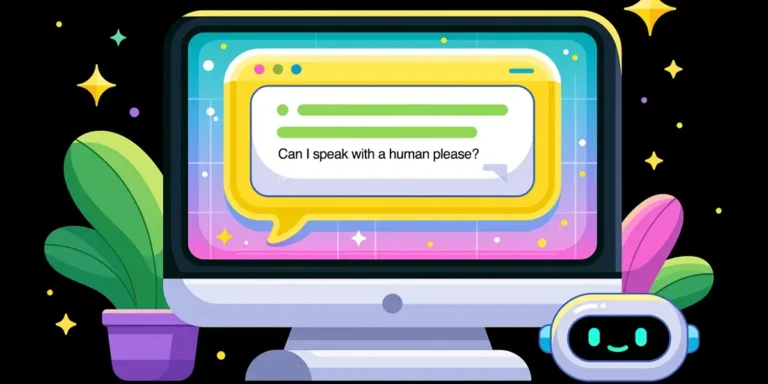

Illustration of a chat window reading "Can I speak with a human please?" next to a smiling AI chatbot icon, representing employee experience with AI-supported IT chat

How IT Support Can Deliver Better Employee Experiences

IT support is usually measured by first-contact resolution and ticket counts, but rarely by whether employees got what they needed. Drawing on a SolarWinds webinar, Stephen Mann looks at why AI’s biggest value lies in preventing issues before a ticket exists, why channel choice counts for more than any single preferred channel, and why most metrics track IT service desk mechanics rather than the outcomes employees experience.

Illustration of a shattered USB drive breaking apart, representing data loss from a deleted partition

Important IT Support Skills: How to Recover a Deleted Partition on a USB Drive

Losing access to a USB drive partition does not necessarily mean your data is gone. In many cases, deleted partitions, file system corruption, and accidental formatting only make files inaccessible rather than permanently erased. This guide explains how to recover USB data from a formatted or deleted partition, restore lost partitions using Windows tools and recovery software, and apply best practices to prevent future data loss.

Olympic rings illustration with small AI robot agents standing beside them, representing agentic AI coordination in ITSM

What ITSM Can Learn from the Olympics in the Agentic AI Era

The Olympics demonstrate that success depends on teamwork, preparation, governance, and seamless coordination – not individual talent alone. Discover how these same principles help IT organizations deploy Agentic AI successfully through better context sharing, AI governance, continuous validation, and clearly defined AI responsibilities.

Two grain silos on a farm, each displaying a portrait, representing silos in IT service management

Simplicity, Service, and the Discipline of Asking Why

Christian Nissen spent four decades in IT service management and helped shape ITIL along the way. In his Conversations with Giants episode, he makes the case that the industry keeps isolating capabilities it should be reintegrating, that it has swapped service for product, and that the skills worth learning are older and plainer than newcomers expect. Here are the ideas practitioners can use now.

Confused robot surrounded by a question mark, representing AI operating without context in IT service desks

Beyond Intelligence: Why Context Is the Missing Piece in AI-Driven IT Service Desks

AI is transforming IT service desks, but not in the way many expect. The real limitation isn’t the intelligence of AI models, it’s the lack of usable context in most IT environments. Between CMDB accuracy, knowledge articles, service catalogs, and tacit expertise, AI is only as effective as the information it can access. Without strong context, even the most advanced AI just scales existing issues.

Illustrated figure holding a large spreadsheet in a swirling colourful environment representing outdated ITAM spreadsheet tracking

IT Asset Management (ITAM) Is the Missing Link in Security, Compliance, and IT Budgeting

IT teams are juggling tight budgets, security gaps, compliance demands, and the growing pressure of AI. One discipline that could ease all of these keeps getting overlooked. Jana Mančíková argues that IT asset management has been around for years, but for too many organizations it still means a spreadsheet and good intentions. The article explains why that has to change, with examples of what a mature ITAM function looks like.

Illustrated laptop exploding with a stopwatch representing IT asset handoff failures in ITSM onboarding

5 IT Asset Handoff Gaps That Disrupt Onboarding and Offboarding (and How ITSM Teams Can Fix Them)

Most IT asset handoff failures aren’t technology issues, they’re workflow issues. Devices, tickets, and CMDB records exist, but unclear ownership, poor visibility, incomplete handoffs, and unmanaged exceptions create delays, security risks, and compliance gaps. Zubair Murtaza walks through five lifecycle gaps that undermine onboarding, offboarding, and device management, and the practical ways to close them.

Illustrated humans and AI robots in a meeting representing Agentic AI in ITSM collaboration

Agentic AI in ITSM Insights and Correlations

The 2026 HCLSoftware-sponsored ITSM.tools survey looks at how Agentic AI is being adopted across service management. This article breaks down the adoption trends, governance priorities, and regional differences the survey found, plus how AI maturity correlates with trust, business value, and organizational outcomes. It’s a snapshot of where Agentic AI is currently delivering in ITSM, and where it still isn’t.

Cartoon child dressed as a superhero standing in a server room representing ITSM heroics culture

Why ITSM Heroics Are Hurting Your Organization

From ancient myths to modern workplaces, we’ve always admired the people who step into chaos and save the day. In ITSM, that mindset plays out when organizations reward the person who resolves the crisis while ignoring the systemic issues that caused it. Alexandros Christias covers why ITSM heroics persist and how to shift recognition from firefighting to prevention.

Robotic hand pressing a large reset button representing the ITSM reset for AI service management

The ITSM Reset: Why AI Can’t Scale Without Strong Service Management Foundations

AI adoption in ITSM is nearly universal, but AI is only as effective as the processes, data, and governance behind it. Research shows a wide gap between AI use and the maturity of underlying ITSM practices. AI can automate and predict, but it can’t fix fragmented workflows, disconnected tools, or bad data. Strengthening ITSM foundations, an ITSM reset, may be the biggest step toward making AI work at scale.

Classical and futuristic figures illustrating the concept of AI agent governance in ITSM

Why AI Agent Governance Belongs in ITSM

As AI agents gain autonomy and become embedded in critical business processes, organizations face a growing governance challenge. Suganya Raju argues that established ITSM capabilities, including risk classification, service ownership, CMDB visibility, change management, and access governance, already provide most of the framework needed. The article covers how to extend what teams already run rather than reinventing.

CAB change advisory board meeting with IT professionals reviewing change requests around a table

Beyond the CAB: A Practical Approach to Modern Change Governance

Traditional Change Advisory Boards help organizations govern production changes, but they introduce bureaucracy, delays, and unclear accountability. Troy Kinsey lays out a modern alternative: asynchronous, responsibility-driven approvals based on defined ownership, targeted oversight, and operational readiness. The article walks through what this looks like once you’ve moved past the CAB, and what it takes to get there.

Two portrait photos pinned to a corkboard covered in colorful notes and papers, representing Daniel Breston and the service management story

Want to Get Service Management Right? Grab a Post-it!

What is service management, really? Daniel Breston’s answer isn’t a framework, and it doesn’t need one. It’s a single question, picked up from his first CEO walking a Houston bank with a Post-it pad. This article unpacks the question, why it still works four decades later, and why frameworks keep failing to capture what it captures immediately.