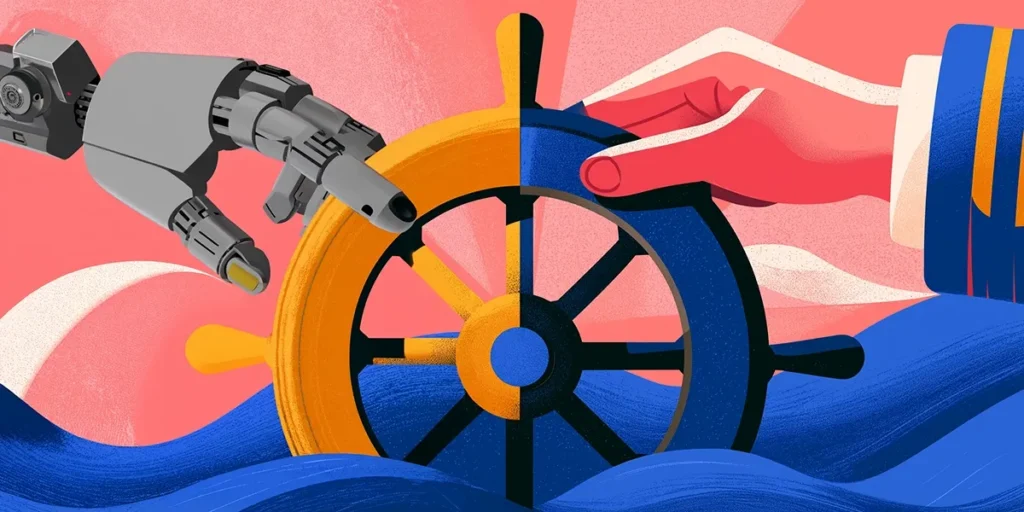
When I first saw the article title “ITSM is Dead?” I was slightly shocked. For a moment, I thought: “Well, that’s it. AI has arrived, and our profession has already received its last rites.” Fortunately, after reading the article, I realized the message was not that IT service management (ITSM) or service management is disappearing. The argument was that it has survived every major technology shift because organizations will always need to manage value, expectations, risk, and relationships. I agree, but with one correction. Service management will survive. However, many of the activities we currently call ITSM probably will not – we will need to manage AI services.
How AI Is Changing Traditional ITSM
Artificial intelligence (AI)-based capabilities will classify tickets, answer routine questions, fulfill standard requests, create knowledge articles, detect incidents, and perhaps resolve problems before end-users notice them. Some ITSM roles will shrink, and traditional IT service desks may become much smaller.
But AI itself introduces another service that must be managed. I have noticed this in conversations with our customers. A customer introduces an AI assistant, and everyone is impressed by how quickly and confidently it answers.
Then the practical questions begin:
- What happens when the answer is wrong?
- Who updates the knowledge behind it?
- Which information is AI allowed to access?
- When should it stop answering and transfer the end-user to a person?
Plus, when someone follows the AI assistant’s advice and something goes wrong, who is responsible?
At this point, we are no longer talking about a clever tool. We are talking about a service.
Why AI Should Be Managed Like Any Other Service
End-users do not care about the AI model, API, database, or cloud platform behind the screen. They only care about the outcome. They want the provided answer to be correct, secure, useful, and trustworthy.
Importantly, an AI system may be online and technically healthy while its service is already failing. For example, it may respond in two seconds but use outdated information. It may reduce ticket numbers while creating hidden errors. It may sound so confident that end-users do not realize when it is wrong.
I have seen environments where end-users began checking AI answers with their colleagues before acting on them. The system was available. The service was not trusted.
This is why AI still needs human management.
Why Human Ownership Still Matters for AI Services
This does not mean a person must approve every AI response. It means people must define what the AI is supposed to achieve, what data it may use, which decisions it can make, what risks are acceptable, and when it must stop and escalate.
AI can execute a process perfectly and still produce the wrong result because the data, rule, or context is wrong.
Someone must therefore own the service and its consequences.
The Future of ITSM in an AI-Driven World
So yes, AI may eliminate many traditional ITSM tasks. It may manage requests, infrastructure, processes, and even other AI systems.
But it cannot be the final owner of why a service exists, whom it serves, what risks are acceptable, or who must answer when it fails.
That responsibility remains human.
AI may become the most capable service provider we have ever created. But it is still a service, and every important service needs a human owner. I hope I’m not wrong.
AI Services FAQs
Hadi Ahmadi’s argument is that once an AI assistant is answering questions or resolving issues for end-users, it stops being just a tool and becomes something that has to be managed like any other service: someone has to own what it does, what it’s allowed to access, and what happens when it gets something wrong.
No. Hadi Ahmadi agrees that service management itself will survive, since organizations will always need to manage value, expectations, risk, and relationships. What changes is that many of the specific tasks currently called ITSM, like ticket classification or answering routine questions, will shift to AI.
Yes. Hadi Ahmadi points out that an AI system can respond quickly while using outdated information, reduce ticket numbers while creating hidden errors, or sound confident while being wrong. Uptime and response speed don’t guarantee the answer was actually correct or trustworthy.
One sign Hadi Ahmadi describes: end-users start quietly checking AI answers with colleagues before acting on them. The system stays available and technically fine, but people stop relying on it directly, which is a service failure even though nothing is “broken.”
Yes, but not in the form of approving every response. Hadi Ahmadi argues people need to define what the AI is supposed to achieve, what data it can use, which decisions it’s allowed to make, what level of risk is acceptable, and when it should stop and hand off to a person.
Hadi Ahmadi’s position is that responsibility stays human. AI can execute a process perfectly and still produce the wrong outcome if the underlying data, rule, or context was wrong, so someone has to own the service and its consequences.
Hadi Ahmadi allows that AI may end up managing requests, infrastructure, processes, and even other AI systems. But he argues it can’t be the final owner of why a service exists, who it serves, or what risk is acceptable; that responsibility remains human regardless of how capable AI becomes.
Further Reading
- https://itsm.tools/the-business-case-for-experiential-learning-in-itsm/
- https://itsm.tools/ai-digital-workers-itsm/
- https://itsm.tools/it-self-service-technology-blocker/
- https://itsm.tools/service-management-value-people/
- https://itsm.tools/extend-itsm-to-legal-and-operations/
- https://itsm.tools/service-management-architecture-ai-intelligent-enterprise/

Hadi Ahmadi (Soroush)
Soroush is a ITSM consultant and helping organizations to start, implement and develop effective services strategies. He is a leader, ITIL lecturer, and consultant with +15 years of activity to business strategy. Also, Soroush is a storyteller, poet and novelist and wrote and published a few books about specialized fields: ITSM,ITOM,ITAM, ESM and Digital transformation in Persian language.