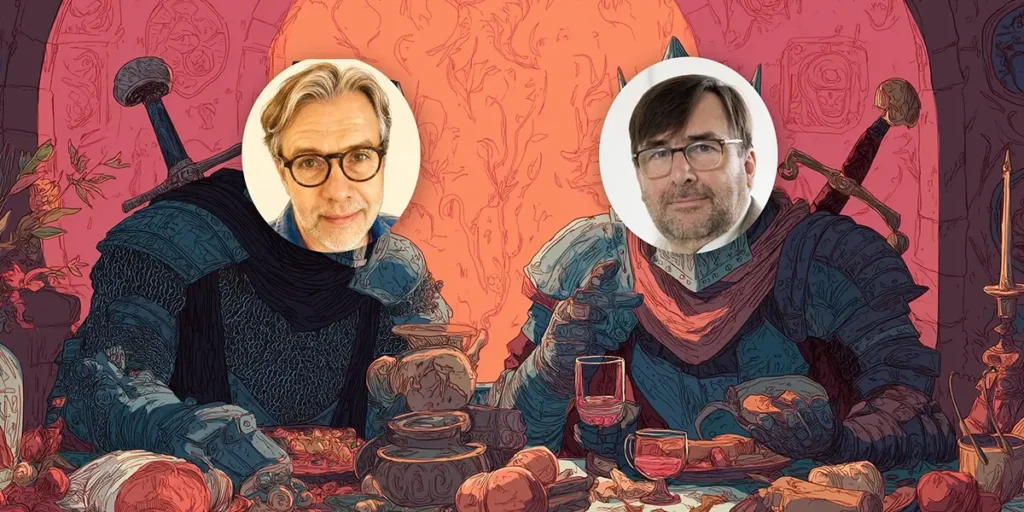
Every few years, somebody announces the end of something in service management. The service desk is dead. IT service management (ITSM) is dead. The IT department is dead. “People have been saying that to me for 35 years,” Barclay Rae told Roman Jouravlev in his Conversations with Giants episode.
Barclay has been an IT service desk manager, a consultant, a former CEO of itSMF UK, an architect of ITIL Practitioner and the lead editor of ITIL 4: Create, Deliver and Support. None of those obituaries has stuck. How you decide what success looks like, how you manage relationships with the rest of the business, how you measure the value of what you do; none of that gets killed off by a new technology.
PCs, client-server, the internet, mobile, social, artificial intelligence (AI): every wave gets called the disruption that finally kills service management, and every wave ends with service management still there, doing the same human work in a new context. The point isn’t that the wider industry has been wrong every time. It’s that the work being announced as obsolete keeps surviving the announcement, because the issue is human, not technological. Paul Wilkinson made the same observation in episode two of the series: the industry keeps getting the same things wrong, and no new framework or certification has changed the pattern.
If anything, Barclay argues, AI has strengthened the case for service management rather than weakened it (i.e. service management isn’t dead). You cannot put AI usefully on top of broken processes, bad data, and disconnected service relationships. The fundamentals have to be in place for any of the new technology to deliver. AI is exposing gaps in service management rather than papering them over.
ITSM is dead? No – Listen, then improve, then translate
Don’t focus on the “ITSM is dead” argument; look at what needs to change in service management.
When asked what communication advice he’d give to technical or delivery teams trying to get their voices, concerns, and innovative ideas heard at the exec level, Barclay started further back than most. Getting a seat at the table (the journey Mark Schwartz wrote a whole book about) isn’t something IT can demand. It depends on the rest of the organization thinking more highly of IT than they currently do. Which means we have to know what they currently think. Which means we have to ask, and then listen, without interrupting to tell them what we’re already doing about it. Experience management is doing exactly this when it’s done well. Most of the time, it isn’t.
He’d once taken a CIO into a meeting with users and given him one instruction: don’t say anything, just let them vent. Toward the end of the meeting, the CIO cracked. “We’re doing something about it,” he said. Don’t go into solution mode, Barclay had told him. Listen and absorb.
After the listening comes the part IT teams are more comfortable with: fixing the things that need fixing. And then, the part Barclay says we’re still bad at: telling the story of what was improved, in language the business uses, in numbers it cares about. Risk reduced. Cost saved. Time freed up. Innovation enabled. He cited the BRM Institute model of the journey from order-taker to strategic partner approvingly. That journey, he said, is what BRM is for.
Most IT people are not marketers, graphic designers, or storytellers, and don’t naturally code-switch out of technical language. The skills the journey requires (translation, packaging, narrative) are the ones IT teams have rarely been hired for, and the ones service management teams still struggle to develop.
The current absence of skills doesn’t help with the “ITSM is dead” argument.
What the ITIL guiding principles were trying to do
What Barclay is most proud of from his work on ITIL Practitioner is the nine guiding principles:
- Focus on value
- Start where you are
- Progress iteratively
- Be transparent
- Keep it simple
- Design for experience
- Work holistically
- Observe directly
- Collaborate
He had originally pushed for something more practice-specific. An authoritative one-line summary of incident management or business relationship management would have helped cut through the framework’s bloat. What emerged instead was more general: a set of principles that doesn’t tie itself to any particular process and travels well outside ITIL. Seven of them carried directly into ITIL 4. Many of them get cited by people who have never even read the Practitioner book.
Barclay still wants the framework material to be shorter. He’s positioned himself as the grumpy guy in the corner on this point, and has been for years. Length is an obstacle to comprehension. So is jargon. So is anything that makes IT harder to understand from the outside rather than easier.
Getting better at selling ITSM definitely helps with the “not dead” message.
What to tell the people coming in (in addition to ITSM not being dead)
Asked what he’d say to someone joining the industry now, Barclay had two answers.
The first was about exposure. There are very few jobs that put you in front of an organization the way service management does, particularly the IT service desk. As a service desk manager, you end up knowing everyone, roughly what they’re working on, and how the business operates, in a way that most other roles inside IT never will. He has argued for years that trainee programmers should spend three months on a service desk before going anywhere else, and he’s worried about what the gradual reduction in frontline service desk roles is doing to that career path.
The second was about being willing to change. Most people Barclay knows in service management didn’t plan to be here. They came in from somewhere else, took an opportunity, and made transitions that scared them at the time. The thing he keeps seeing in people who’ve built long careers is the willingness to make those jumps. Going independent is his go-to example: it terrifies people, and those who do it find that a much wider set of options opens up afterward.
Both pieces of advice point to the same thing. Service management’s job is to pay attention to how the rest of the business works and to translate what IT does into language the business recognizes. That job has not died. Forty years in, Barclay is still doing it. And someone will likely be announcing that service management is dead again in five more years.
Further Reading

Sophie Danby
Sophie is a freelance ITSM marketing consultant, helping ITSM solution vendors to develop and implement effective marketing strategies.
She covers both traditional areas of marketing (such as advertising, trade shows, and events) and digital marketing (such as video, social media, and email marketing). She is also a trained editor.