Coronavirus Articles

ITSM tool migration is inevitable. The ITSM tool landscape is constantly shifting. Products are sunsetted, licensing models change, companies merge and consolidate platforms, and organizations simply outgrow their ITSM tools. At some point, you’ll migrate ITSM tool, whether you planned to or not. This article will help you!
What happened to ITSM evangelists? Explore why they disappeared, the value they brought, and why the ITSM industry needs them more than ever in 2026.
The mismatch between producer effort and user value is something Mark Smalley, IT Paradigmologist and author of nine books on digital and service management, has been thinking about throughout his career. In this article on the first episode of Roman Jouravlev’s Conversations with Giants series, Mark covers several ideas that have held up across four decades in ITSM.
A ticket gets escalated, comes back marked “add notes before escalation,” gets reassigned, then returns with “should have been resolved at L1.” Meanwhile the end-user is still waiting. Eusoph Simba argues the ticket ping-pong between support tiers isn’t an escalation problem but a problem with how we frame support levels. He makes the case for treating every ticket as an issue to solve, escalating on capability rather than hierarchy, and a simple standard format that breaks the loop.
This article by Daniel Breston is about neurodivergence in ITSM and was sparked (pardon the pun) by his attendance – and what he did and didn’t feel – at the Service Desk Institute (SDI) SPARK26 event.
ITIL (Version 5) describes the ITIL guiding principles as: “Recommendations that can guide an organization in all circumstances, regardless of changes in its goals, strategies, type of work, or management structure.” This article explains more.
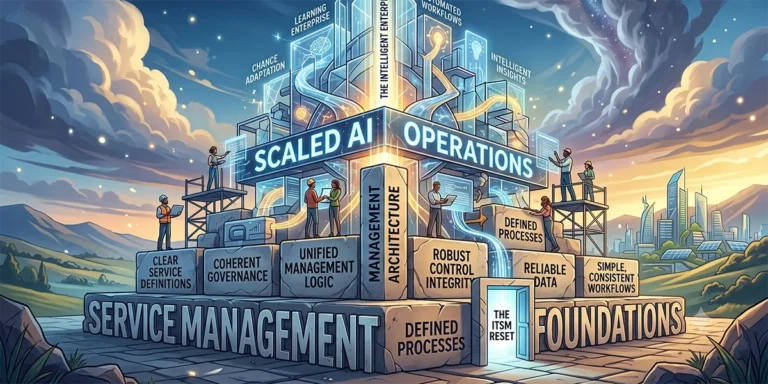
AI is already here. The level of AI inclusion in ITSM tools and platforms is quite remarkable when you look at it closely. The question isn’t whether to engage with it — it’s whether your organization has the right foundations in place to make it work. Trust, governance, and a clear reason for adopting it in the first place are what separate the organizations that get results from those that don’t.
How would you rate your organization’s ITSM or ITIL-adoption success? Not just in terms of process or practice adoption, but in serving your parent business. To help, PeopleCert has created an ITIL Performance Benchmarking Model. Helped by defined ways for calculating key metrics.
The Service Desk Institute (SDI) held its annual SPARK conference in Birmingham in March. In this article, you’ll find an overview of what Vawns Murphy sees as the best bits, including top tips and advice from the presenters. 
The rule of thumb in ITSM has long been that implementation costs one to three times the software license. Richard Mendis of Bytemethod.ai makes the case that agentic AI finally breaks this calculation, by taking on the configuration, documentation, and maintenance work that consumes the bulk of implementation budgets.
In this article, learn how artificial intelligence (AI) help desks powered by LLMs and AI agents automate IT support, reduce Tier 1 tickets, cut costs, and scale IT support operations.
There is a growing chorus complaining about “AI slop” in IT service management (ITSM). This article by Ian Clayton looks at how we had “slop” before we had “AI slop” and the connectivity between the two.
The release of the ITIL (Version 5) Foundation publication brings with it interest in what has changed from ITIL 4. This article shares 20 changes in ITIL (Version 5) compared to ITIL 4, including updates to the Value System, certifications, and AI governance.
It’s the small issues that can kill your team. It comes from the tiny cuts: the password resets, access tweaks, profile changes, and “just a quick question” tickets that never make a headline but never stop arriving either. ITSM automation will help – this article explains how.
Artificial intelligence is changing IT service management for the better. In this article, discover how AI in ITSM is transforming ITSM – from automation and predictive incidents to smarter knowledge and better end-user experiences.